The National Education Policy 2020 (NEP) is the Government of India’s framework for school education. For parents of young children, three ideas matter most.
1. A new structure built around how children grow
NEP replaces the old 10+2 structure with a 5+3+3+4 design. The first five years are the Foundational Stage: three years of pre-primary education followed by Classes 1 and 2, roughly ages 3 to 8. Play, activity and discovery are the main ways of learning in this stage.
2. Reading and numbers come first
The policy calls foundational literacy and numeracy (FLN) an urgent national priority. In practice this means every child should read with understanding and handle basic maths by the end of Class 3.
At our school, our mission includes teaching basic FLN: reading with understanding, solving basic maths, learning about the surrounding nature and learning the state language, Marathi.
3. Progress is more than a mark
NEP asks schools to look at the whole child. Our pupils receive a Holistic Progress Card (HPC), which shows the level reached in each competency with a descriptive note. The teacher, a classmate, a parent and the child all take part in the assessment.
How this looks in our classrooms
- Learning is child-centric, with teachers acting as facilitators.
- English vocabulary is built steadily, and concepts are understood as a whole.
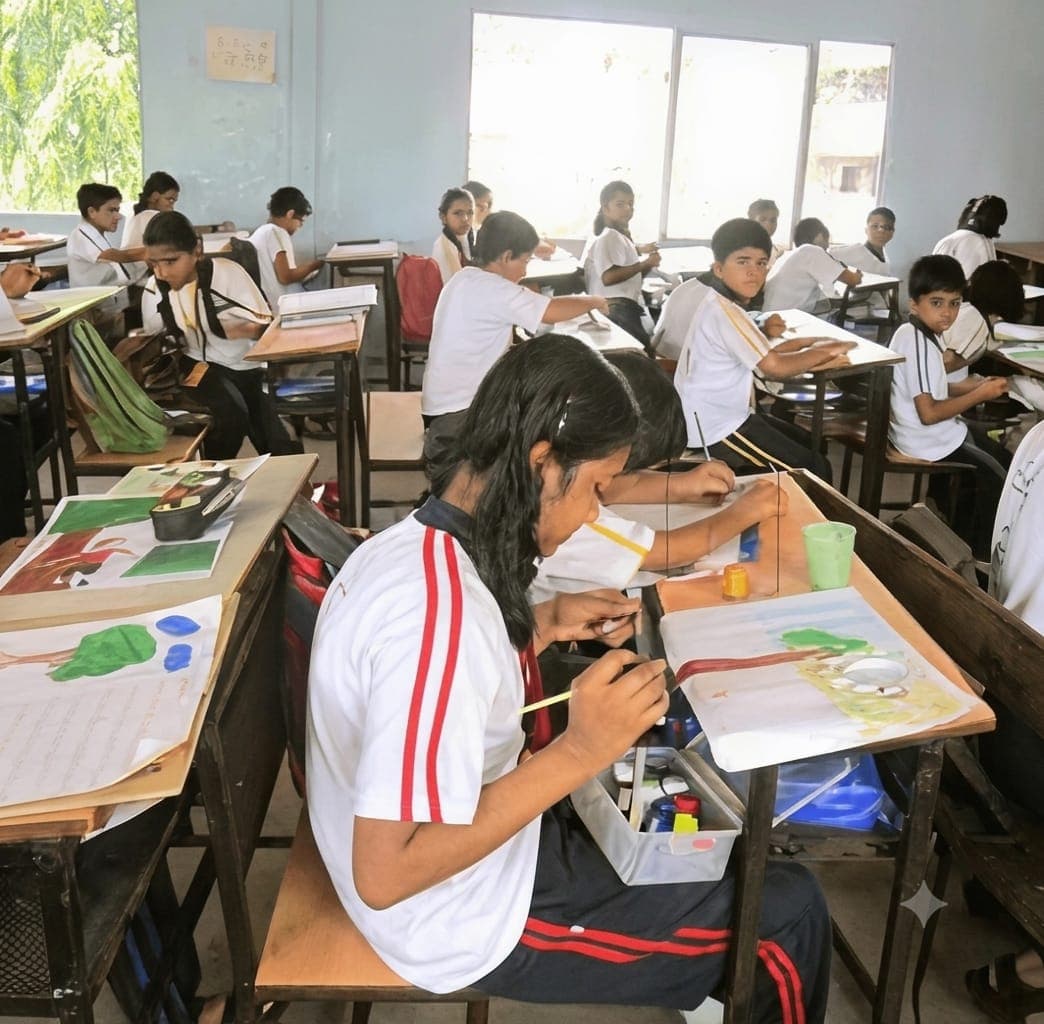
- Drawing, Craft, Work Experience and Physical Education run alongside core subjects.
You can read more on our Learning page.
Common questions
Is the school a CBSE school?
No. The school follows the Maharashtra State Board (SSC) curriculum and teaches in line with the National Education Policy.
What is FLN?
FLN stands for foundational literacy and numeracy: reading with understanding and doing basic maths. NEP 2020 makes it the first priority in the early years.